Consumer AI · Web app · Live site
CurateLove
A free AI love-letter generator that turns a few relationship details into a finished letter in about two minutes, with no signup and no stored letters.
- Client
- CurateLove
- Sector
- Consumer AI
- Build
- Web app
- Our part
- Web designPersonal branding
- Delivered
- Product design · Interface build · Prompt flow
The problem.
AI writing tools ask for an account, a card or a subscription before they show you anything usable. For a task this small — one letter, once — that trade is bad, and the writing that comes back usually reads like neither the sender nor a human.
What we did.
Put the generator in the hero
The inputs are the first thing on the page. No sign-up wall, no product tour, no five-section argument before the visitor can try it.
Designed for one sitting
Occasion, recipient, tone and a few details, then a draft in about two minutes — the whole flow fits on a phone screen without scrolling back.
Backed the writing with research
The page explains what the generator is doing and cites the relationship research behind the structure, so the output is not presented as a black box.
Where it landed.
Live and free to use, with letters generated on the spot and nothing stored between sessions.
The build, as it runs.
Screenshots taken from the live deployment at 1440px wide, at four points down the page. Nothing staged.
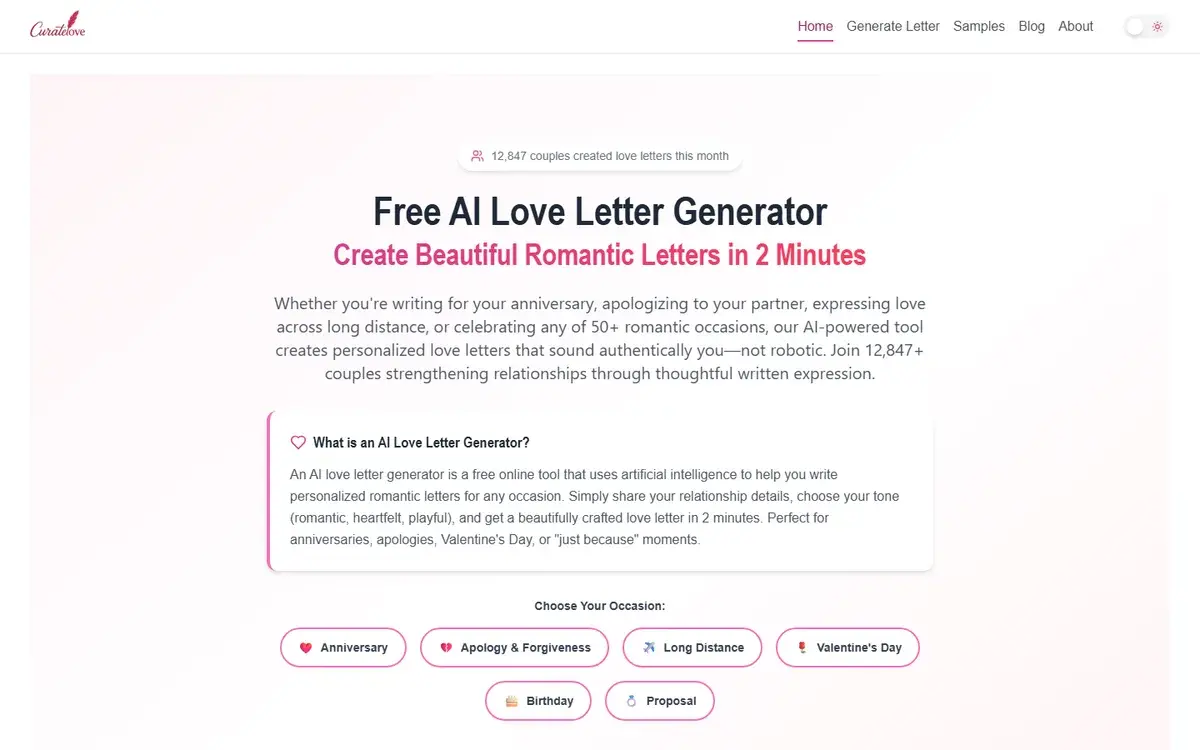
Homepage — the generator input, not a sign-up wall 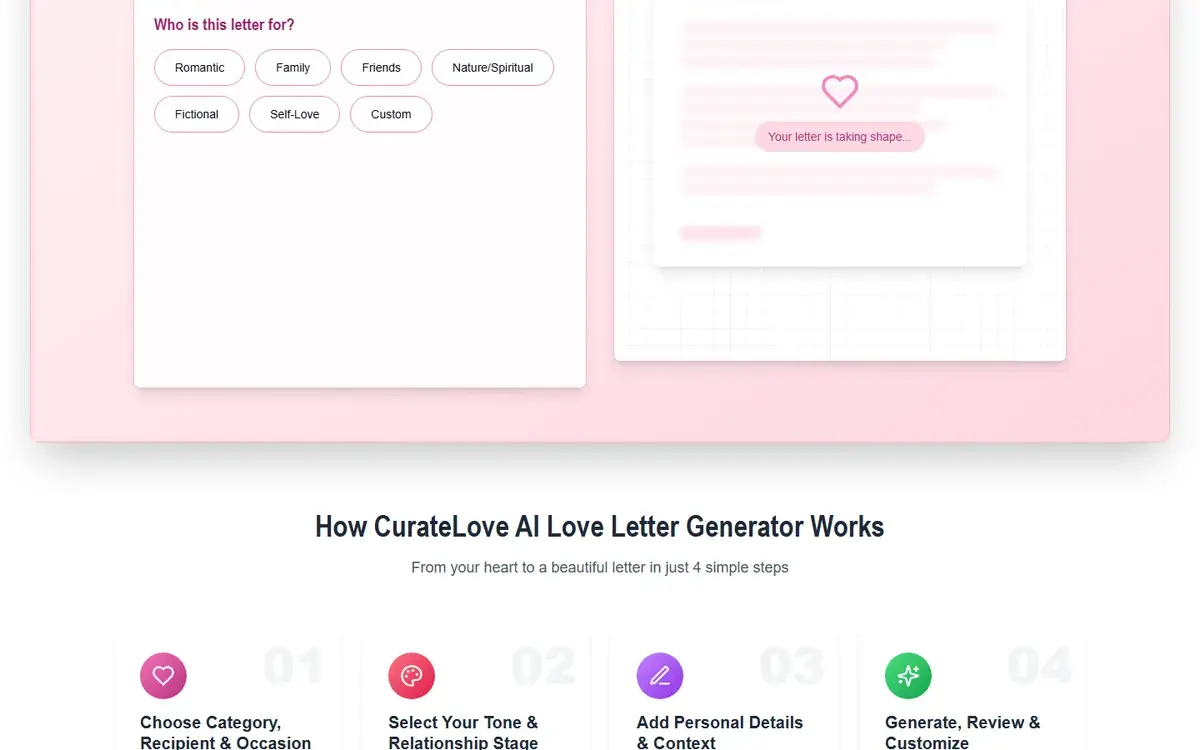
How the letter is built, step by step 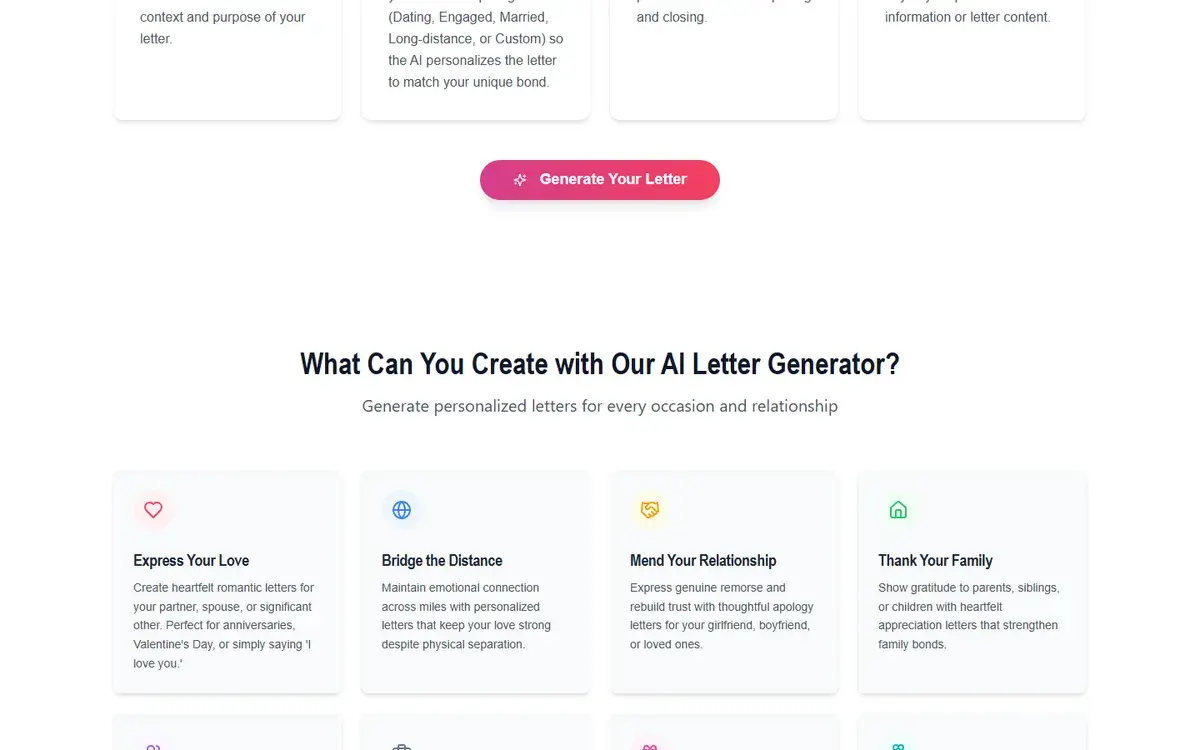
The research behind the writing, cited on the page 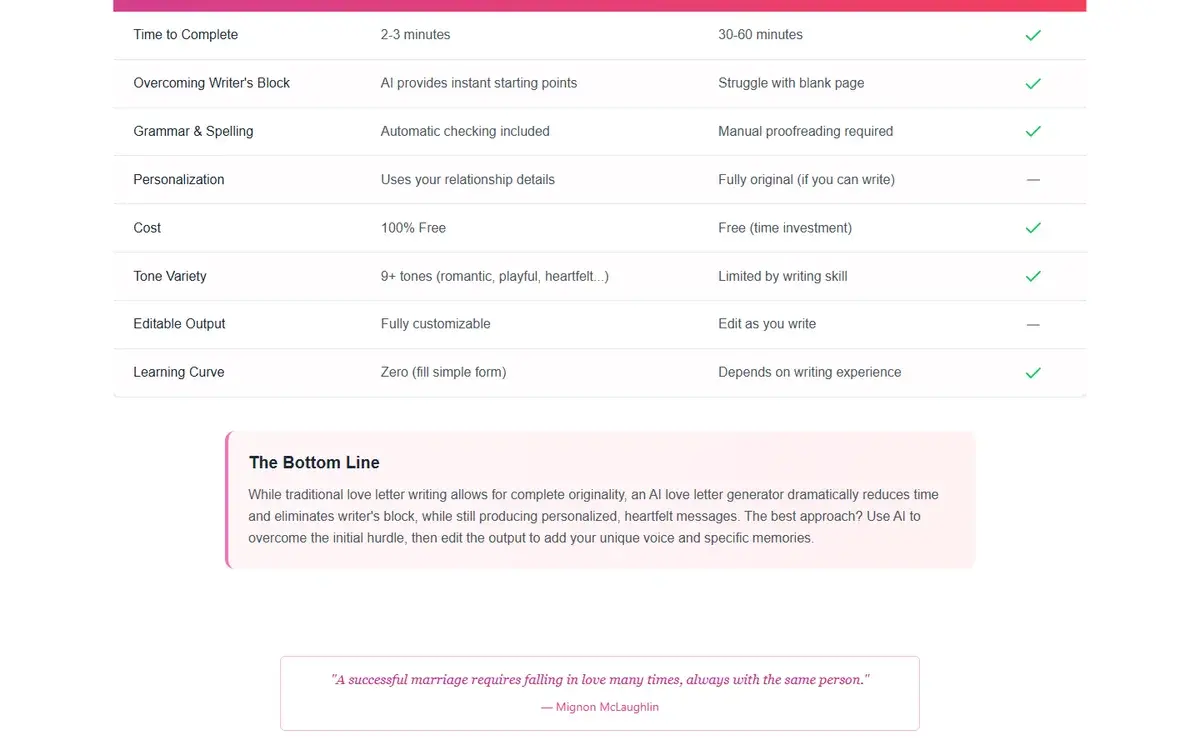
Occasion and recipient entry points
Next.
All work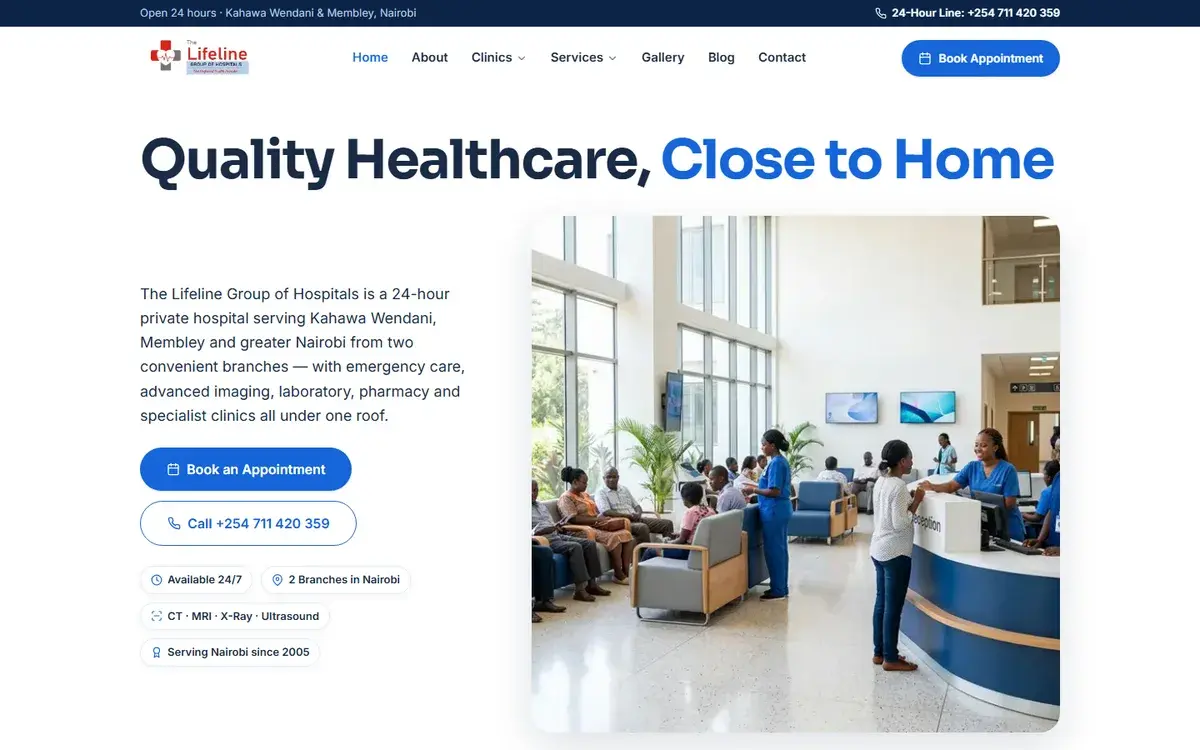
Lifeline Group of Hospitals
A 24/7 private hospital site for two Nairobi branches, covering emergency care, imaging, specialists, branch details and appointment requests.
Read the case study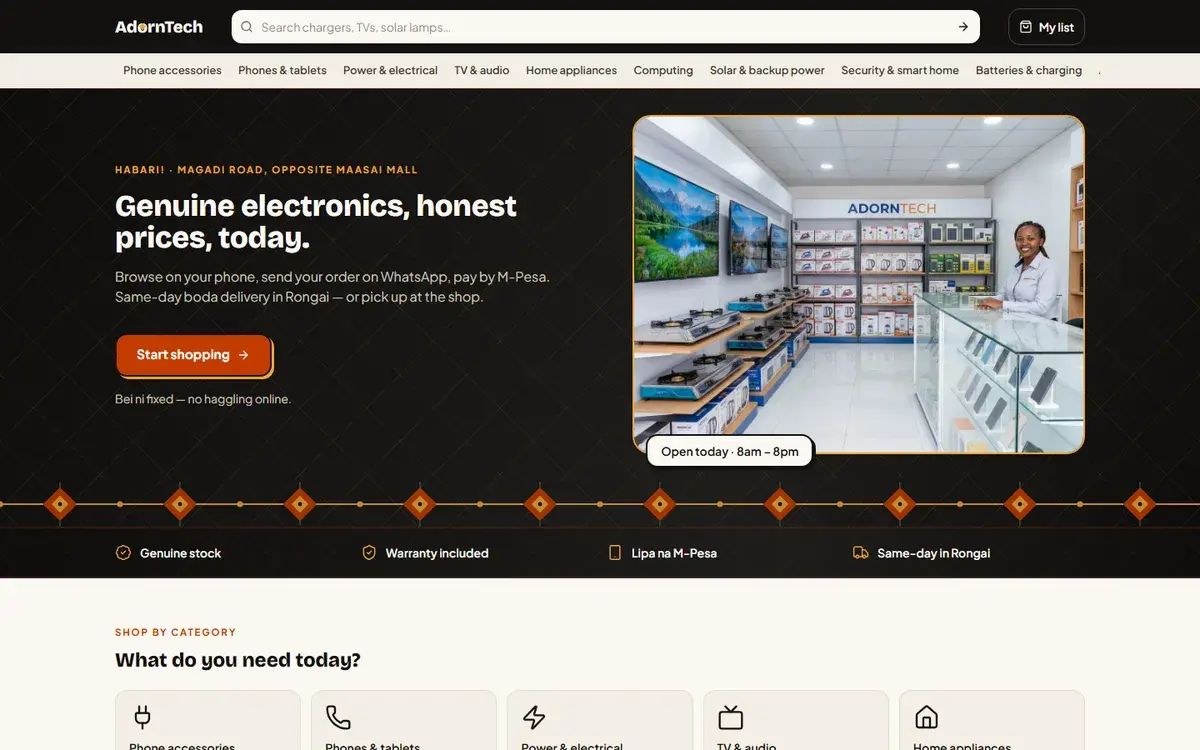
AdornTech
An electronics storefront for Ongata Rongai: a browsable catalogue, WhatsApp ordering, M-Pesa payment and same-day delivery.
Read the case study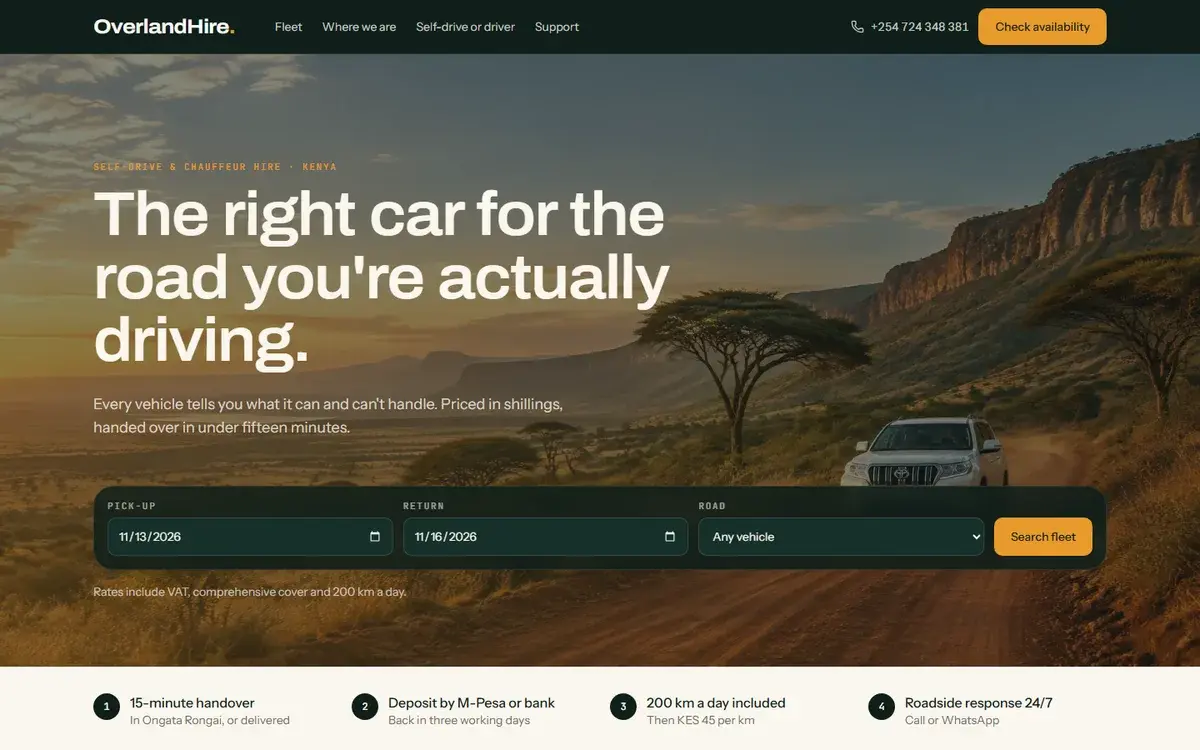
OverlandHire
Self-drive and chauffeur hire with plain-KES pricing, a fleet search and a 15-minute handover promise.
Read the case study